
Hydration at Altitude: Why Colorado's Dry Climate Is Hard on Your Skin Barrier
Hydration at Altitude: Why Colorado's Dry Climate Is Hard on Your Skin Barrier
Living in Colorado comes with plenty of benefits.
Your skin may not always agree.
Dryness, tightness, flaking, increased sensitivity, and that familiar feeling that your moisturizer disappeared an hour after application can all become more noticeable in Colorado's climate.
The reason is more complicated than simply living at altitude.
Colorado combines high elevation with generally low humidity, abundant sunshine, significant daily temperature changes, and frequent wind. The Colorado Climate Center describes the state's climate as generally dry, with low humidity that favors rapid evaporation. Colorado Climate Center
For your skin, that environment can make maintaining hydration more challenging.
The solution is not necessarily adding more products.
It is choosing products that help your skin attract water, replace important lipids, and slow the loss of moisture from the surface.
Why Colorado Can Be So Drying to the Skin
Your skin is constantly exchanging water with the surrounding environment.
The outermost layer of the skin, called the stratum corneum, helps control that process. Healthy skin needs enough water inside this layer while also maintaining an effective barrier that prevents excessive water loss.
Research shows that environmental humidity can influence the amount of water contained in the stratum corneum. Low humidity has also been associated with increased skin roughness, reduced elasticity, dryness, and changes in normal barrier function. Importantly, research on the exact effect of humidity on transepidermal water loss is somewhat mixed, so the relationship is more complex than saying dry air simply "sucks water" from the skin. PubMed
Colorado adds several additional challenges.
Cold weather and indoor heating can increase dryness during fall and winter. Wind can make already dry skin feel more irritated. Large temperature swings mean your skin may move repeatedly between heated indoor air and cold outdoor conditions.
Elevation also affects ultraviolet exposure. The World Health Organization estimates that ultraviolet radiation increases by approximately 10 percent for every 1000 meters of elevation because there is less atmosphere available to absorb it. World Health Organization
That does not mean altitude itself is the sole cause of dry skin. It means Colorado combines several environmental stressors that can make a weak skincare routine much more noticeable.
Think of Your Skin Barrier as a Wall
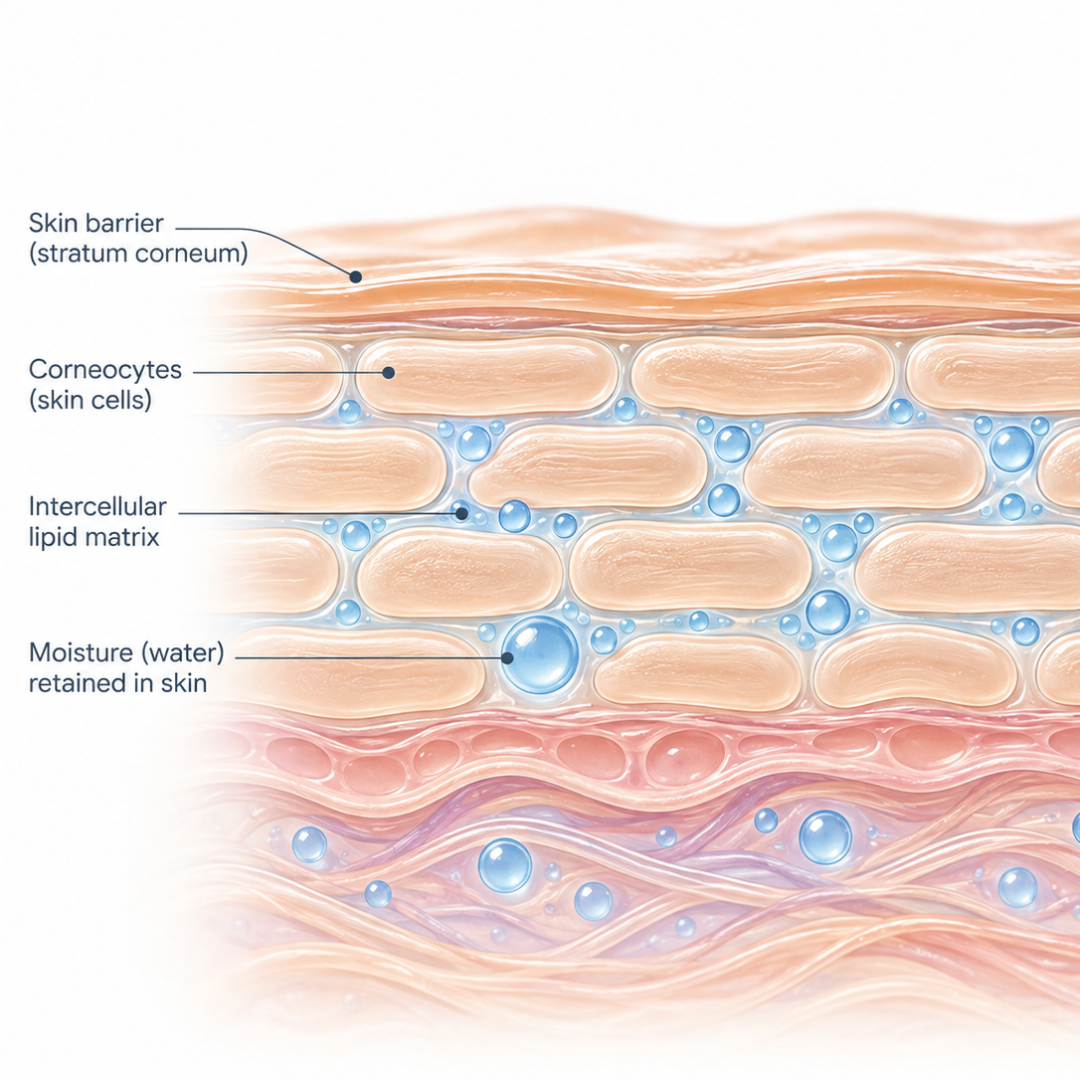
One of the easiest ways to understand the skin barrier is to imagine a brick wall.
The skin cells are the bricks.
The lipids surrounding them act like mortar.
Those lipids include ceramides, cholesterol, and fatty acids that help keep the structure intact and reduce unnecessary water loss.
Inside the skin cells are compounds collectively known as natural moisturizing factor. These substances help attract and retain water inside the stratum corneum.
Research shows that both natural moisturizing factor and the lipid structure surrounding skin cells are critical for maintaining hydration. PubMed
When that system is disrupted, skin may begin to feel tight, rough, flaky, irritated, or unusually sensitive.
This is why simply applying a lightweight hydrating serum may not solve persistent dryness.
A serum may add water attracting ingredients, but your routine also needs to help keep that water from escaping.
The Three Types of Ingredients Colorado Skin Needs
A strong hydration routine usually combines three types of moisturizing ingredients rather than relying on a single trendy ingredient.
Humectants Bring Water Into the Outer Skin
Humectants help attract and retain water.
Common examples include glycerin, hyaluronic acid, sodium hyaluronate, urea, and certain natural moisturizing factor components.
Glycerin has particularly strong evidence supporting its role in improving skin hydration. Hyaluronic acid can also be useful for adding hydration and improving the feel of dry skin.
There is a persistent skincare myth that hyaluronic acid should never be used in a dry climate because it will pull moisture out of your skin.
That is too simplistic.
The more practical approach in Colorado is to use humectants as part of a complete routine and follow them with a cream containing emollient or occlusive ingredients.
Emollients Fill the Gaps
Emollients soften the skin and help fill spaces between cells in the outer layer.
Examples include squalane, shea butter, fatty alcohols, plant oils, and other lipid based ingredients.
Ceramides are particularly relevant because they are naturally found within the skin barrier itself. Clinical research suggests that ceramide containing moisturizers can improve hydration and barrier function in dry or barrier impaired skin. PubMed
Occlusives Help Keep Water From Escaping
Occlusive ingredients create a protective layer that slows evaporation from the skin.
Petrolatum is one of the best studied examples. Dimethicone and certain oils can also contribute to this effect.
In a controlled study examining dry skin, petrolatum improved barrier function while glycerin improved hydration. A formulation combining these approaches produced benefits beyond relying on either mechanism alone. PubMed
That gives us a simple Colorado skincare rule:
Attract water, support the barrier, then help keep the water there.
Specific Products That Fit a Barrier Focused Routine
Product names matter less than formulation, but looking at actual formulas makes the science easier to understand.
DefenAge 1 Step Multi Cleanse
Over cleansing can make Colorado dryness worse.
The goal is to remove sunscreen, makeup, oil, and environmental debris without leaving the skin feeling stripped after every wash.
DefenAge describes its 1 Step Multi Cleanse as a hydrating cleanser designed to support the skin barrier. Its formula includes panthenol, urea, amino acids, and several water binding ingredients. The fragrance free version can be especially useful for people trying to simplify a routine that already feels irritating. DefenAge
A useful test is simple.
If your face feels tight immediately after cleansing, your cleanser or cleansing routine may be too aggressive for your current barrier.
DefenAge 24/7 Barrier Balance Cream
For Colorado dryness, the moisturizer is usually the most important product in the routine.
DefenAge's 24/7 Barrier Balance Cream contains several ingredient categories that make sense for dry environments, including shea butter, safflower derived lipids, macadamia oil, sunflower oil, niacinamide, hyaluronic acid, panthenol, and squalane.
The manufacturer specifically positions the product around hydration and barrier support. DefenAge
From an ingredient perspective, what is useful here is the combination. You are not relying on hyaluronic acid alone. You have water attracting ingredients together with oils and emollients that help support moisture retention.
DefenAge 8 in 1 BioSerum
The 8 in 1 BioSerum contains glycerin, niacinamide, sodium hyaluronate, dimethicone, and several botanical and antioxidant ingredients. DefenAge
This makes it a useful example of a serum that contributes hydration while also containing ingredients that help soften and condition the skin.
One important note is that DefenAge has its own recommended application sequence. If you use the complete system, follow the manufacturer's instructions rather than assuming every serum should automatically be applied before every cream. DefenAge
Petrolatum for Very Dry Areas
Sometimes the simplest product is still one of the most useful.
The American Academy of Dermatology specifically recommends creams and ointments for very dry skin and lists petrolatum among the ingredients that can help. American Academy of Dermatology
A small amount can be useful on particularly dry areas such as around the lips or other flaky patches when appropriate.
That does not mean covering your entire face in an ointment is necessary for everyone. Product texture should still match your skin type, acne tendency, and treatment plan.
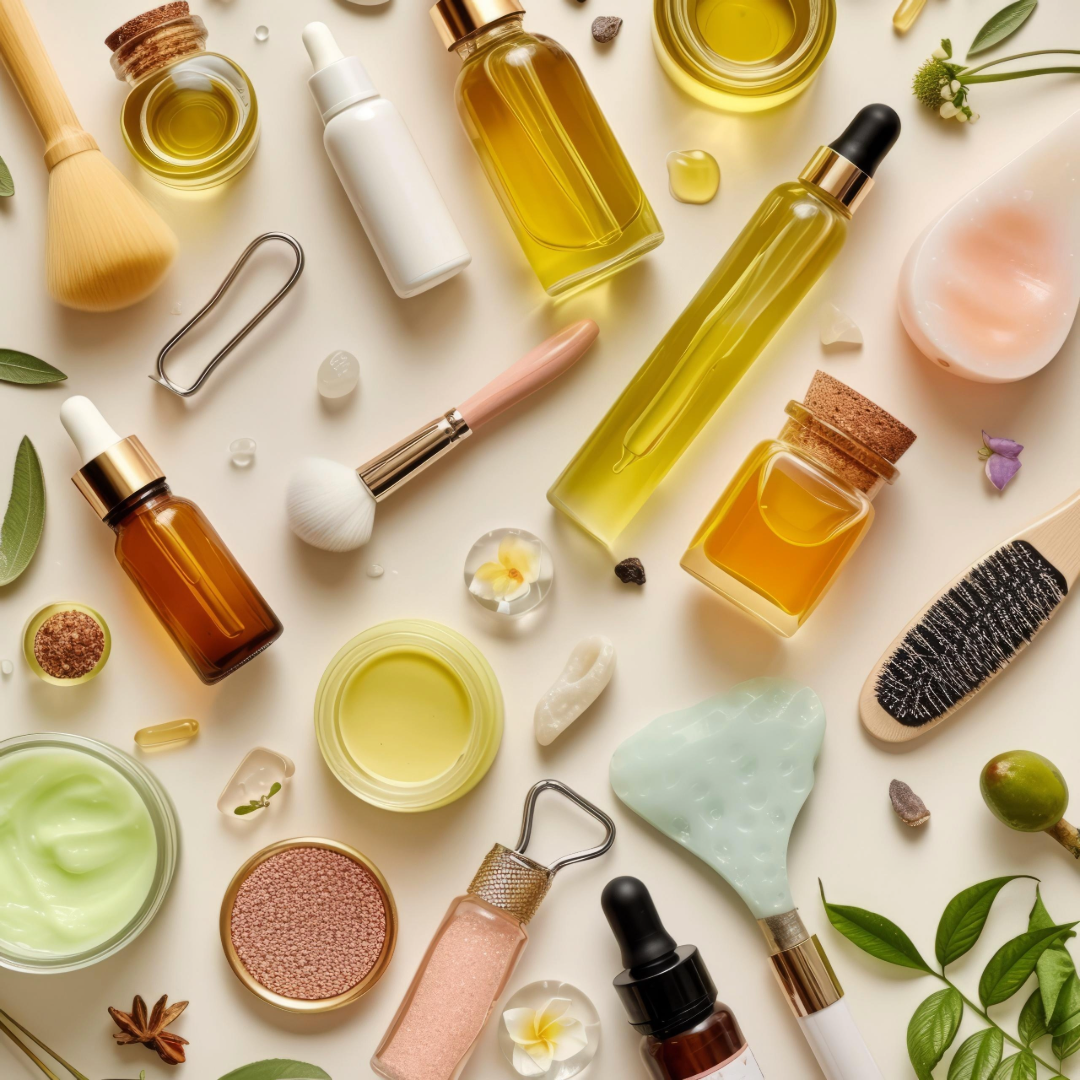
Your Colorado Hydration Routine Should Also Protect Against UV
Hydration and sun protection should not be separated in a high elevation skincare routine.
Higher altitude means greater ultraviolet exposure because less atmosphere is available to absorb ultraviolet radiation. US EPA
The American Academy of Dermatology recommends broad spectrum, water resistant sunscreen with an SPF of 30 or higher as part of protecting dry skin. American Academy of Dermatology
A simple morning routine might therefore look like this:
Gentle cleanser or rinse based on your skin needs
Hydrating and treatment products appropriate for your skin
Barrier supporting moisturizer
Broad spectrum SPF 30 or higher
At night, focus more heavily on cleansing gently, restoring moisture, and limiting unnecessary irritation.
That last point can make a surprisingly large difference.
If your skin suddenly becomes dry, red, tight, or sensitive, adding another exfoliating acid is usually not the first move.
Temporarily reducing strong exfoliants, retinoids, harsh cleansers, and excessive scrubbing may give the barrier time to recover. The American Academy of Dermatology similarly recommends avoiding irritating products when skin becomes excessively dry. American Academy of Dermatology
Colorado skincare does not need to be complicated.
It needs to account for the environment you actually live in.
Build a Routine for Colorado Skin
If your moisturizer seems to disappear halfway through the day or your skin constantly feels tight despite using hydrating products, the issue may be less about adding moisture and more about keeping it there.
At Dimensions, we can help you explore medical grade skincare options and build a home routine based on your skin type, current treatments, and individual goals.
Ask about skincare options designed to support hydration, barrier health, and healthier looking skin in Colorado's dry climate.
Schedule your appointment online
Individual skin needs vary. Persistent dryness, cracking, itching, or inflammation may also indicate an underlying skin condition that should be evaluated by a qualified medical professional.
Quick Links
All Eye
Care Services
Keep
In Touch
MAP

Contact Info
Hours
By Appointment Only
© 2026 Dimensions Eye & Aesthetics. All Rights Reserved. Accessibility Statement - Privacy Policy - Sitemap
Powered by: 